


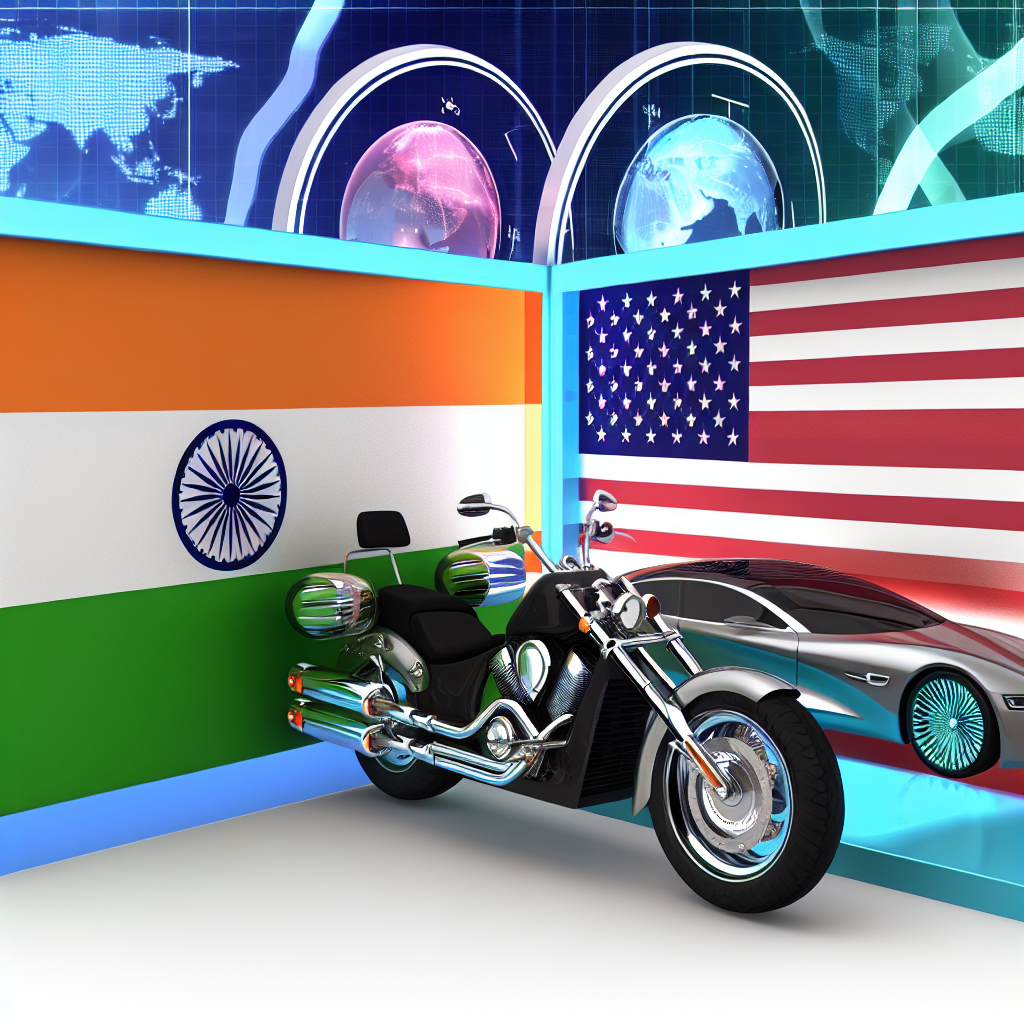
India and the United States have moved a step closer towards sealing an interim trade agreement. This will also affect the automotive sector. Under the proposed agreement, India will allow zero-duty access for large American motorcycles. The move will particularly benefit Harley-Davidson, as well as provide tariff concessions on select high-end American cars.According to government officials, as quoted by PTI, import duty on motorcycles with engine capacities ranging from 800 cc to 1,600 cc and above will be phased out once the agreement comes into force. This is a significant change, as India has recently reduced duties on such bikes. In 2025, import duty on fully built motorcycles up to 1,600 cc was reduced from 50 percent to 40 percent, while duty on motorcycles above 1,600 cc was reduced from 50 percent to 30 percent. The new agreement goes a step further by zeroing out the duty for large capacity bikes.
This move will directly benefit Harley-Davidson. Although India remains a relatively small market for premium motorcycles and the US has limited share in the segment, the decision holds symbolic and commercial significance. Harley-Davidson currently operates in India through a partnership with Hero MotoCorp, announced in October 2020. Under this arrangement, Hero develops and sells Harley-branded motorcycles, manages service and parts, and retails accessories, riding gear and merchandise through dedicated dealerships and its extensive network.Apart from motorcycles, the interim trade agreement also provides relief to the car sector. India will provide duty concessions on imported US cars, especially diesel vehicles with engine capacity of 2,500 cc and above and petrol vehicles of 3,000 cc and above. For high-end internal combustion engine cars of more than 3,000 cc, the tariff will be reduced by about 30 per cent over a phased period of up to 10 years. Earlier, the import duty on such luxury vehicles could go up to 110 percent.In return, the US will remove reciprocal duties on some auto parts imported from India, while some components will continue to attract duties of up to 18 percent. A joint statement on the interim trade agreement has already been issued and the agreement is expected to be signed by mid-March.
India-US trade agreement: makes Tesla advantage?
However, one notable exclusion from the deal is electric vehicles. Officials have clarified that EVs are not part of the tariff concessions. The government appears keen to protect the sector from foreign competition at this stage, with heavy investment by many local manufacturers under schemes such as the production-linked incentive programme.This exclusion means that US-based EV maker Tesla will not benefit from the agreement. Any Tesla model imported into India will continue to face heavy import duties, keeping prices high. Currently the company sells its Model Y in India.
(TagstoTranslate)India US trade deal(T)Harley Davidson India(T)electric vehicle import duty(T)Automotive trade deal US India(T)Tesla Model Y India(T)Harley-Davidson(T)Hero MotoCorp(T)Tesla
