


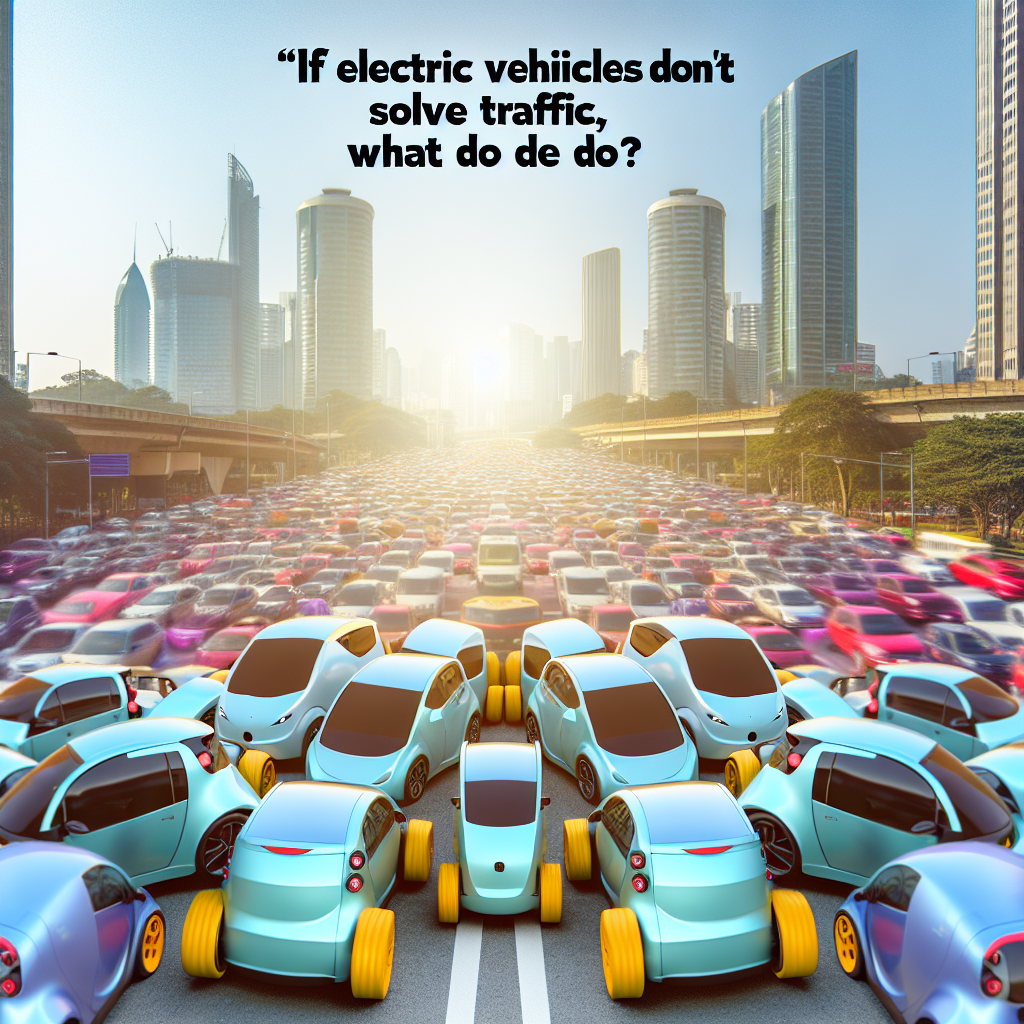
This article is written by Rajiv YSR, Director, ThunderPlus.The shift to electric cars has often been presented as the ultimate solution to modern urban transportation problems. Improved air quality, reduced emissions, and reduced reliance on non-renewable energy resources can be seen as legitimate and necessary improvements in such cases, especially for rapidly growing cities. But the truth is that there is a misconception about how electricity-based transportation will solve traffic congestion. This is a myth. There is no way that electric cars will solve traffic problems because traffic is not about emissions but about efficiency.The essence of congestion is that it is the result of a mismatch between the size of traffic and the limited nature of road space. A road space can only carry a certain amount of traffic, regardless of how the vehicles using the road operate. The fact that cars run on petrol, diesel or electricity will not change the physical space occupied by the vehicle. A traffic jam made up entirely of electric vehicles is still a traffic jam; Just one that is relatively quiet and produces less pollution.This becomes more apparent when considering the geometry of the traffic jam. Each individual car typically consumes 8 to 10 square meters of road surface area in a journey, and even more if proper distance between cars is considered. In densely populated cities, each car usually holds only one person. As a result, a large amount of road space is being consumed for the movement of very few people. This situation will not change with the use of electric vehicles. In fact, it may make the problem worse because, by making car use more environmentally friendly, the use of electric vehicles may lead to an increase in car ownership and use.Adding insult to injury is the proven effect of “induced demand.” The less expensive it is to travel by car, which is generally true for electric cars because of their low energy costs and low maintenance, the more likely they are to use a car. This efficiency trend rapidly disappears once demand increases so much that all available roads are occupied. This process has happened repeatedly whenever new highways have been opened. Initially, extra capacity helps ease congestion; But soon, more vehicles join the fray, and congestion levels return to normal or worsen.The problem of congestion should be looked at from an alternative perspective – one that focuses not on vehicles but on mobility. The best approaches are those that emphasize efficient movements where fewer individuals use limited spatial resources. Efficient transportation modes such as metro, buses and suburban trains can easily transport thousands of persons per hour compared to private cars, which use relatively large spatial resources. However, efficiency alone is not enough. Efficiency is only one factor, reliability, frequency and connectivity play important roles in adoption. Without reliable and consistent schedules, travelers will opt for private cars regardless of any environmental concerns.It is also important to address the problem of first and last mile connectivity which often hinders the use of public transport. Even the best planned metro system fails if people have trouble reaching the stations or getting from there to their destination. This can be addressed by integrating a system of easy connectivity through different modes of transportation such as electric rickshaws, bicycle sharing programs and walkable cities.Another extremely effective but highly political tool is demand management. Technologies such as congestion pricing, variable parking rates and no-car zones directly affect commuters by imposing costs on using the road system, especially during rush hours. Cities that have employed these technologies have seen an undeniable trend toward carpooling, traveling outside of rush hour, and using public transportation. This is not just traffic management; This is a redefinition of incentives for better mobility.It is equally important to mention that urban design and land use can also significantly influence the way people move from one place to another. Long commutes are often the inevitable result of zoning that separates residential areas from commercial districts as well as areas used for production. However, a mixed-use strategy will reduce trips, as everything people need will be close enough, thus making walking and cycling a better option.Technology comes into play, yet not in the traditional sense of the word. The future of intelligent transportation lies not in technological developments at the vehicle level but in technological synergy as a whole. Advanced digital technology platforms, including ride-sharing schemes as well as information about transportation and traffic, are able to significantly improve the effectiveness of transportation in the city. The focus here is not on personal vehicles, but on access to transportation in general.No one can underestimate the importance of EV. These machines are essential to reduce greenhouse gas emissions and promote clean air in cities. But this benefit is environmental; It has nothing to do with physical location. To assume that EVs are the solution to traffic problems would be to ignore the need for a fundamental restructuring of our transportation system.In short, an effective transformation of urban transportation will focus not on the power in our vehicles, but on whether our systems are efficient or inefficient. Cities will succeed that emphasize throughput over speed, shared transportation over private transportation, and accessibility over mobility. In this context, EVs are just one part of the equation.If all vehicles with internal combustion engines are replaced with vehicles with electric motors, cities will definitely be cleaner. However, they will not necessarily be faster, less congested, or more efficient. Congestion will continue as it is, essentially without any change. Then again, the real problem lies in rethinking transportation.Disclaimer: The views and opinions expressed in this article are solely those of the original author and do not represent the Times Group or any of its employees.
(TagstoTranslate)Electric vehicles(T)Emissions(T)Carbon emissions(T)Efficiency(T)ERV efficiency(T)Traffic issues(T)Transportation
