


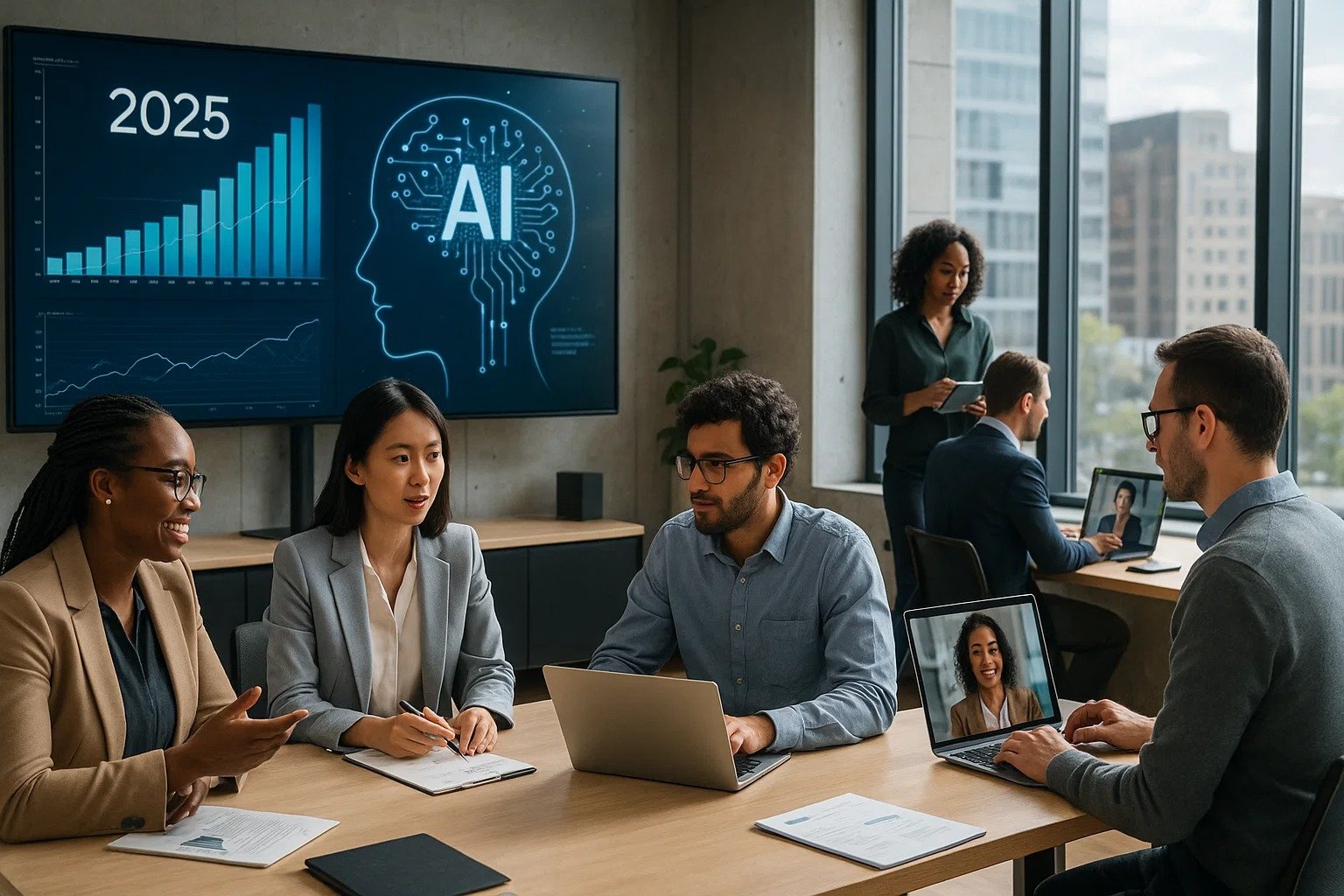
The business world is evolving at an unprecedented pace. As 2025 approaches, companies must anticipate trends that could redefine industries, disrupt markets, and reshape the global economy. Understanding these emerging trends is not just about staying competitive—it is about positioning businesses to seize new opportunities and mitigate risks. From technological advancements to shifts in consumer behavior, the upcoming decade promises transformative changes. This article explores the top ten emerging business trends for 2025, analyzing their potential economic impacts and highlighting strategies for companies to adapt successfully.
1. Artificial Intelligence and Automation
Artificial intelligence (AI) is no longer a futuristic concept. By 2025, AI and automation are expected to dominate business operations, ranging from customer service chatbots to advanced predictive analytics. Companies leveraging AI can reduce operational costs, enhance decision-making, and provide personalized customer experiences. Automation of repetitive tasks increases efficiency, allowing employees to focus on creative and strategic functions. Economically, AI is projected to contribute trillions of dollars to global GDP, while also shifting labor markets toward high-skill roles. Businesses that fail to integrate AI risk losing ground to competitors who can leverage data-driven insights and machine learning.
2. Remote Work and Hybrid Models
The COVID-19 pandemic accelerated the adoption of remote work, and this trend continues to gain traction. By 2025, hybrid work models—where employees split time between home and office—will become the norm. Companies can save on real estate costs and access a broader talent pool, while employees enjoy flexibility and improved work-life balance. Economically, remote work impacts urban centers by reducing commuting, altering real estate demand, and stimulating digital infrastructure investment. Businesses must adopt robust communication tools, cybersecurity measures, and performance tracking to maintain productivity in distributed teams.
3. Sustainable and Green Business Practices
Environmental sustainability is no longer optional; it has become a competitive advantage. Consumers increasingly prefer eco-friendly products, and governments are implementing stricter environmental regulations. By 2025, businesses adopting sustainable practices—from reducing carbon emissions to ethical sourcing—will gain market share and investor confidence. Green initiatives also foster innovation in energy, materials, and production methods, driving economic growth. Companies that ignore sustainability risk regulatory fines, reputational damage, and lost market opportunities.
4. E-commerce and Digital Marketplaces
E-commerce has already transformed retail, but its growth trajectory remains strong. By 2025, digital marketplaces will dominate consumer purchasing, fueled by mobile commerce, social shopping, and AI-driven recommendations. Businesses can reach global audiences without the need for physical storefronts, while consumers benefit from convenience and variety. Economically, this trend supports logistics, digital payments, and supply chain innovations. Companies must invest in seamless user experiences, personalized marketing, and secure transaction systems to capture the expanding online consumer base.
Projected Economic Impact of Key Business Trends
| Trend | Projected GDP Contribution | Employment Effect | Key Industries Impacted |
|---|---|---|---|
| Artificial Intelligence | $15 trillion by 2030 | Shift toward high-skill roles | Tech, Finance, Healthcare |
| Remote Work & Hybrid Models | $1.5 trillion | Decentralized workforce growth | IT, Services, Education |
| Sustainable Business Practices | $12 trillion | Green jobs expansion | Energy, Manufacturing, Retail |
| E-commerce & Digital Marketplaces | $8 trillion | Logistics and delivery expansion | Retail, IT, Payment Systems |
5. Personalization and Customer Experience
Customer expectations are evolving rapidly. In 2025, businesses that deliver personalized experiences through data analytics and AI will have a competitive edge. Personalization includes tailored product recommendations, customized marketing, and individualized support. Enhanced customer experiences foster loyalty, repeat purchases, and higher lifetime value. Economically, businesses investing in customer experience tools see increased revenue, while industries like retail, hospitality, and entertainment benefit from elevated consumer spending. Companies must collect and analyze customer data ethically, balancing personalization with privacy concerns.
6. Blockchain and Decentralized Finance
Blockchain technology is revolutionizing transparency and trust in business operations. By 2025, blockchain applications will extend beyond cryptocurrencies to supply chain management, secure contracts, and decentralized finance (DeFi). Businesses can streamline operations, reduce fraud, and ensure data integrity. Economically, blockchain adoption lowers transaction costs, increases efficiency, and supports financial inclusion. Companies in finance, logistics, and healthcare can leverage blockchain to gain credibility and operational efficiency while expanding their global reach.
7. Gig Economy and Freelance Workforce
The gig economy continues to expand, offering flexibility for workers and cost efficiency for companies. By 2025, a significant portion of the workforce will engage in freelance, contract, or project-based work. This trend reduces fixed labor costs for businesses and allows rapid scaling of specialized skills. Economically, the gig economy stimulates entrepreneurship, innovation, and new business models, while also raising questions about benefits, worker rights, and social security. Companies must develop strategies to integrate freelancers effectively while maintaining consistent quality and engagement.
8. Health and Wellness Integration
Wellness is becoming a central focus for employees and consumers alike. Businesses integrating health initiatives—mental health programs, fitness incentives, and healthy workplace environments—experience higher productivity and lower turnover. By 2025, wellness-focused companies will attract top talent and build stronger brand loyalty. Economically, this trend fuels the healthcare, fitness, and nutrition industries, while reducing healthcare-related costs for employers. Companies should adopt holistic wellness programs that address both physical and mental health to remain competitive.
Emerging Workforce Trends and Impacts
| Trend | Workforce Impact | Economic Implications | Key Sectors |
|---|---|---|---|
| Gig Economy & Freelancers | Flexible, project-based employment | Entrepreneurship, labor market fluidity | IT, Marketing, Creative Industries |
| Health & Wellness Integration | Improved employee productivity | Lower healthcare costs, increased spending | Corporate, Healthcare, Fitness |
| Remote Work & Hybrid Models | Distributed workforce | Urban decentralization, digital infrastructure | IT, Services, Education |
Cybersecurity and Data Privacy
As businesses become more digital, cybersecurity and data privacy become critical. By 2025, companies investing in robust security measures will protect assets, maintain customer trust, and comply with regulations. Economically, cybersecurity drives demand for skilled professionals, security software, and risk management solutions. Companies failing to prioritize security face reputational damage, financial losses, and regulatory penalties. Incorporating cybersecurity strategies and employee training programs is essential for sustainable business growth.
Artificial Intelligence in Decision-Making
Beyond automation, AI is becoming integral in strategic decision-making. By analyzing massive datasets, AI helps leaders forecast trends, optimize supply chains, and personalize marketing. Companies leveraging AI-driven decisions outperform competitors in efficiency and innovation. Economically, AI adoption boosts productivity, reduces waste, and accelerates revenue growth across industries. Decision-makers must understand AI capabilities, ethical considerations, and integration challenges to maximize benefits.
Technology-Driven Business Trends and Benefits
| Trend | Key Benefits | Long-Term Economic Effect | Industries Benefited |
|---|---|---|---|
| AI in Decision-Making | Efficient decision-making, predictive analytics | Increased revenue, operational efficiency | Finance, Retail, Logistics |
| Cybersecurity & Data Privacy | Risk mitigation, trust enhancement | Reduced losses, compliance benefits | IT, Banking, Healthcare |
| Blockchain & Decentralized Finance | Transparency, cost reduction | Operational efficiency, global reach | Finance, Supply Chain, Healthcare |
Conclusion
The business landscape in 2025 will be shaped by technology, sustainability, and evolving workforce dynamics. Companies that anticipate these trends and adapt proactively will enjoy competitive advantages and sustainable growth. From AI and blockchain to remote work and wellness integration, the coming years present both challenges and opportunities for businesses and the global economy. Understanding these trends, investing in innovation, and fostering a skilled, adaptable workforce are essential strategies to thrive in the fast-changing business environment. Those who embrace these emerging trends will not only drive economic growth but also set new standards for success in the global marketplace.
